
72,00 €
VISTA: It presents a ruby-garnet color with violet reflections, bright and medium-light in body, which announces freshness and elegance.
NOSE: On the nose, it unfolds a careful blend of fresh red fruit —cherry, sour cherry— along with hints of red flowers and a mineral and earthy background that evokes the high-altitude soils of northern Argentina.
BOCA: It's tense and refined: the vibrant acidity It keeps the wine alive. The tannins are fine and silky, and the medium body provides presence without excessive weight. The finish is clean, with a aftertaste of ripe red fruit, a subtle spicy touch, and a sense of elevation that invites another glass.
OCTOPUS LEG The wine's altitude profile brings minerality and acidity that “lift” the texture of the octopus and balance its grilled flavor. The wine's red fruit contrasts elegantly with the dish's seafood notes.
Cod Ravioli This is a dish with delicacy and a defined flavor. La Matriarca, with its finesse, lively acidity, and light tannin, allows the cod to be the star without the wine overpowering it; it cleanses the palate after each bite.
SALMON: The wine's height profile balances the natural fat of salmon. The combination of light red fruit, lively acidity, and soft tannin allows for pairing fatty fish with a modern, elegant Pinot Noir.
PROVOLETA It might seem strong, but the acidity of Pinot Noir cuts through the fat of the cheese very well, and the fruit refreshes it.
Sweetbreads The crisp texture and smooth fat pair well with wines of firm acidity and fine tannin.
SEARED BEEF TATAKI The smooth, juicy texture pairs perfectly with a light red wine. The red fruit accompanies without overpowering, and the acidity balances the toasted exterior.
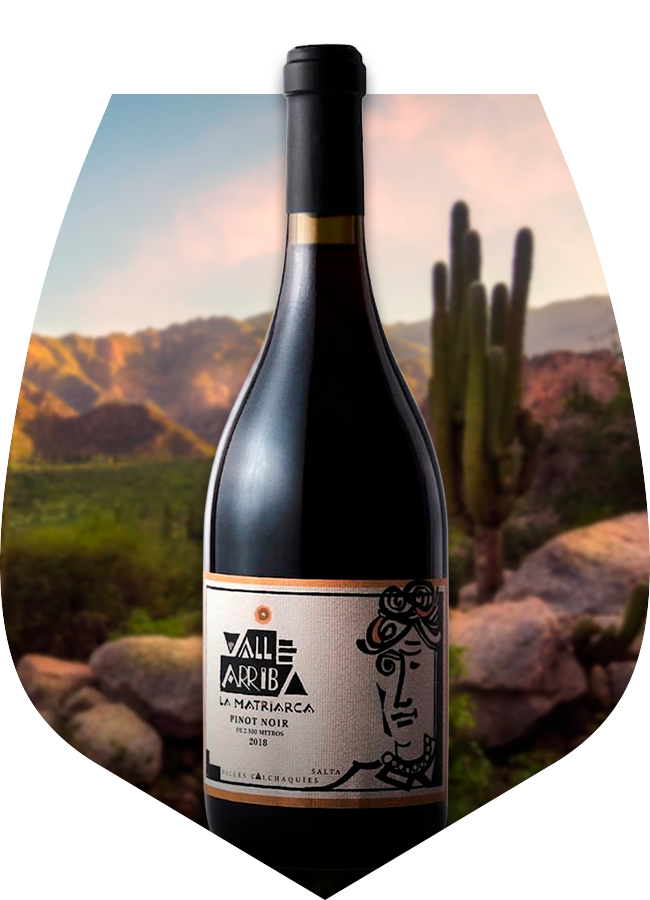
La Matriarca 2020 comes from vineyards located at approximately 2,500 meters above sea level in Molinos, within the Calchaquí Valleys. The high-altitude soils, with intense sun exposure and significant day-night temperature swings, give the Pinot Noir a unique expression of pure fruit and mineral freshness.
The harvest is done by hand, with rigorous selection. Winemaking respects varietal identity: controlled fermentation to preserve the fruit, moderate aging to add complexity without masking freshness. The commercial description states that on the palate it is “frank, with an unctuous texture, vibrant acidity, and firm tannins.”.
The combination of extreme altitude, soil, and climate (high solar radiation, temperature fluctuations) gives this Pinot Noir a very distinct identity: more tension than power, more subtlety than volume.